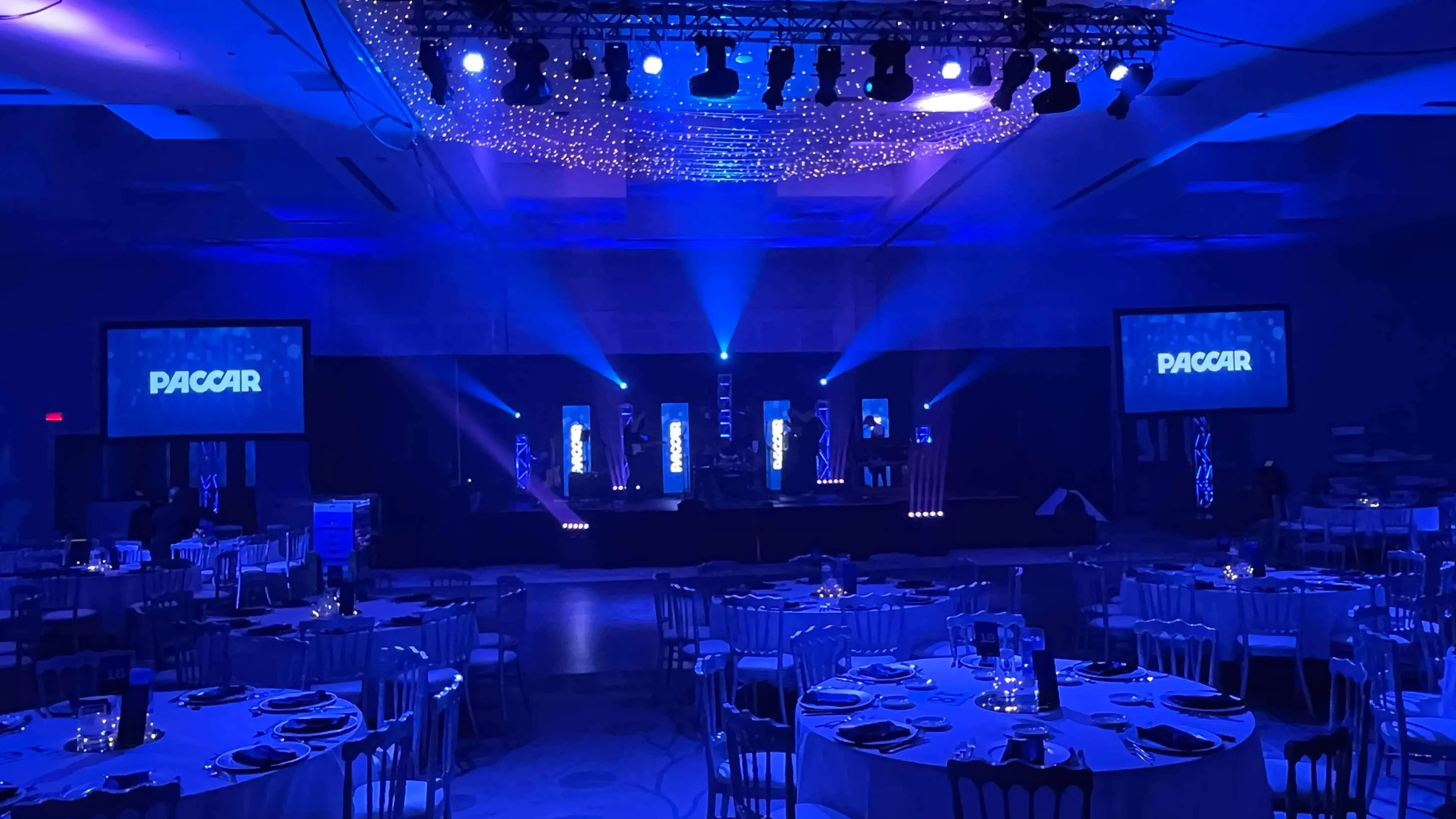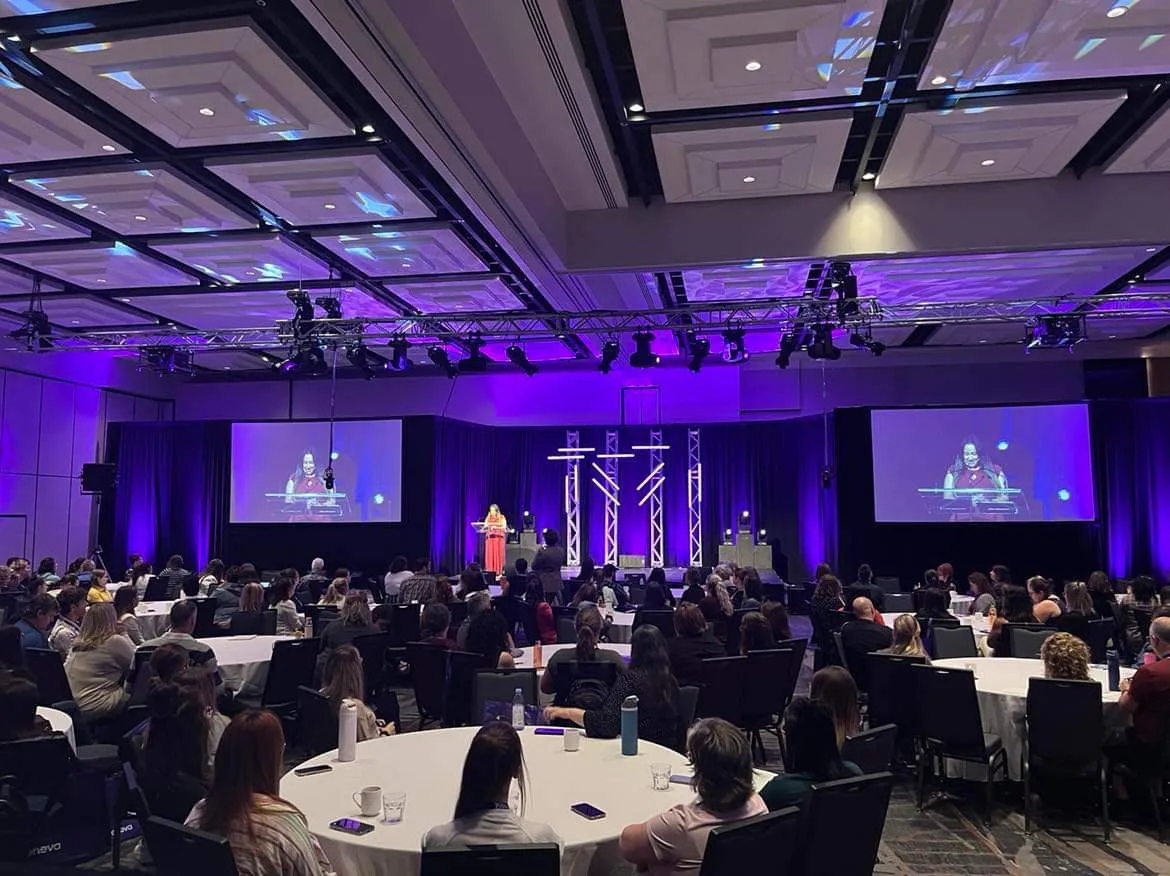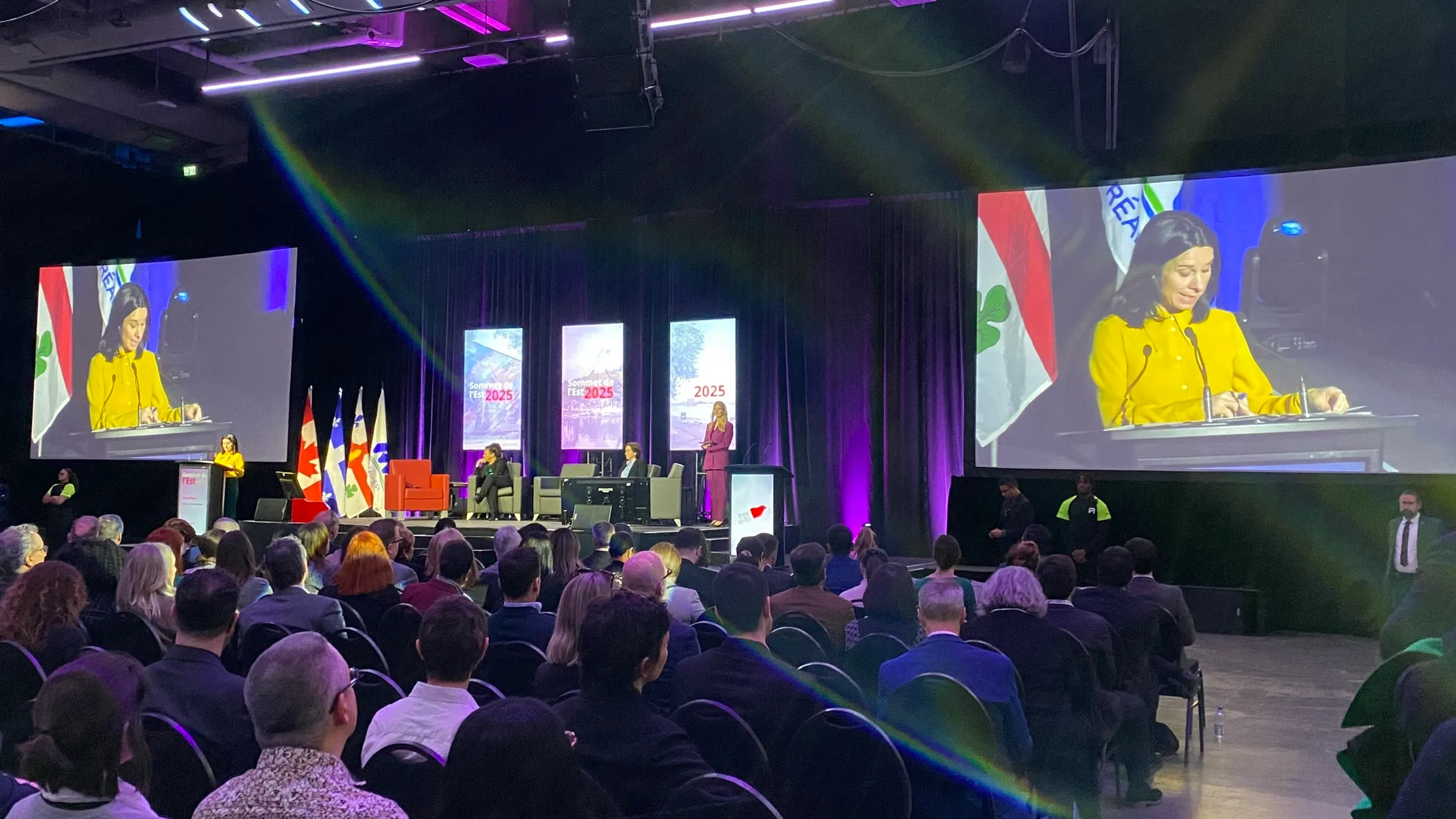
Lighting dictates what your audience sees. A well-lit speaker appears credible, while a flat stage feels like an impromptu meeting. SYNC Audiovisuel designs and operates stage lighting for your conferences, galas, conventions, and launches: stage plots, LED fixtures, DMX control, and on-site technicians.
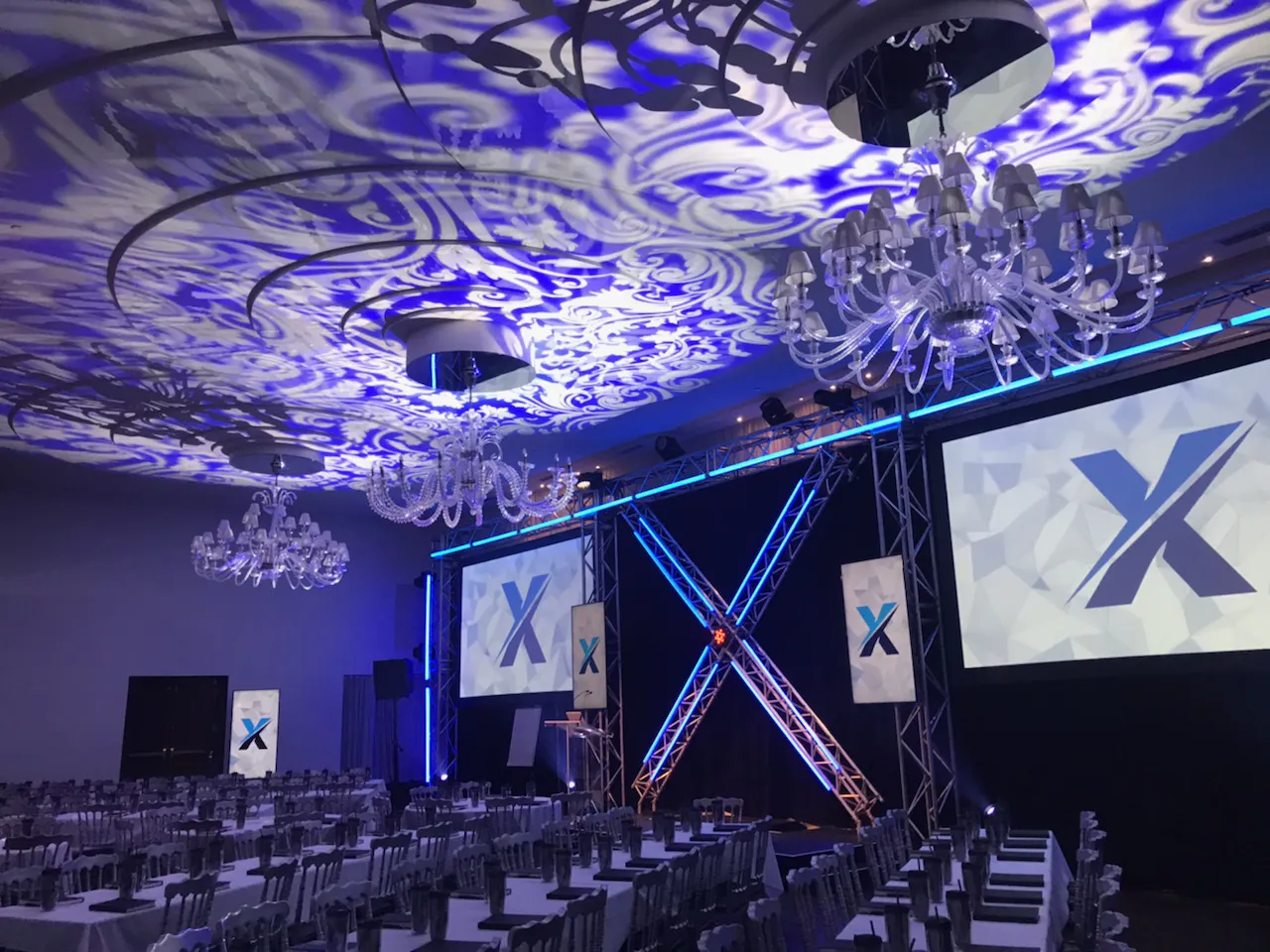
Successful stage lighting serves three functions at once:
Making faces legible — for both the live audience and the recording cameras. It’s the foundation: a clear front light, without harsh shadows under the eyes.
Sculpting the space — separating the person from the background, adding depth to a set, and framing the stage.
Narrating the program — one color for the opening, another for the awards ceremony, a blackout before a video. Light punctuates the flow of the event.
That’s why we never just deliver a batch of lights. We start with the stage plan, camera placement, and the minute-by-minute run of show.
Every type of lighting has a specific role. Here are the families we use most in corporate events:
LED technology now dominates our inventory: less heat for your guests, lower power requirements to negotiate with the venue, and a full color palette without the need for gel changes.
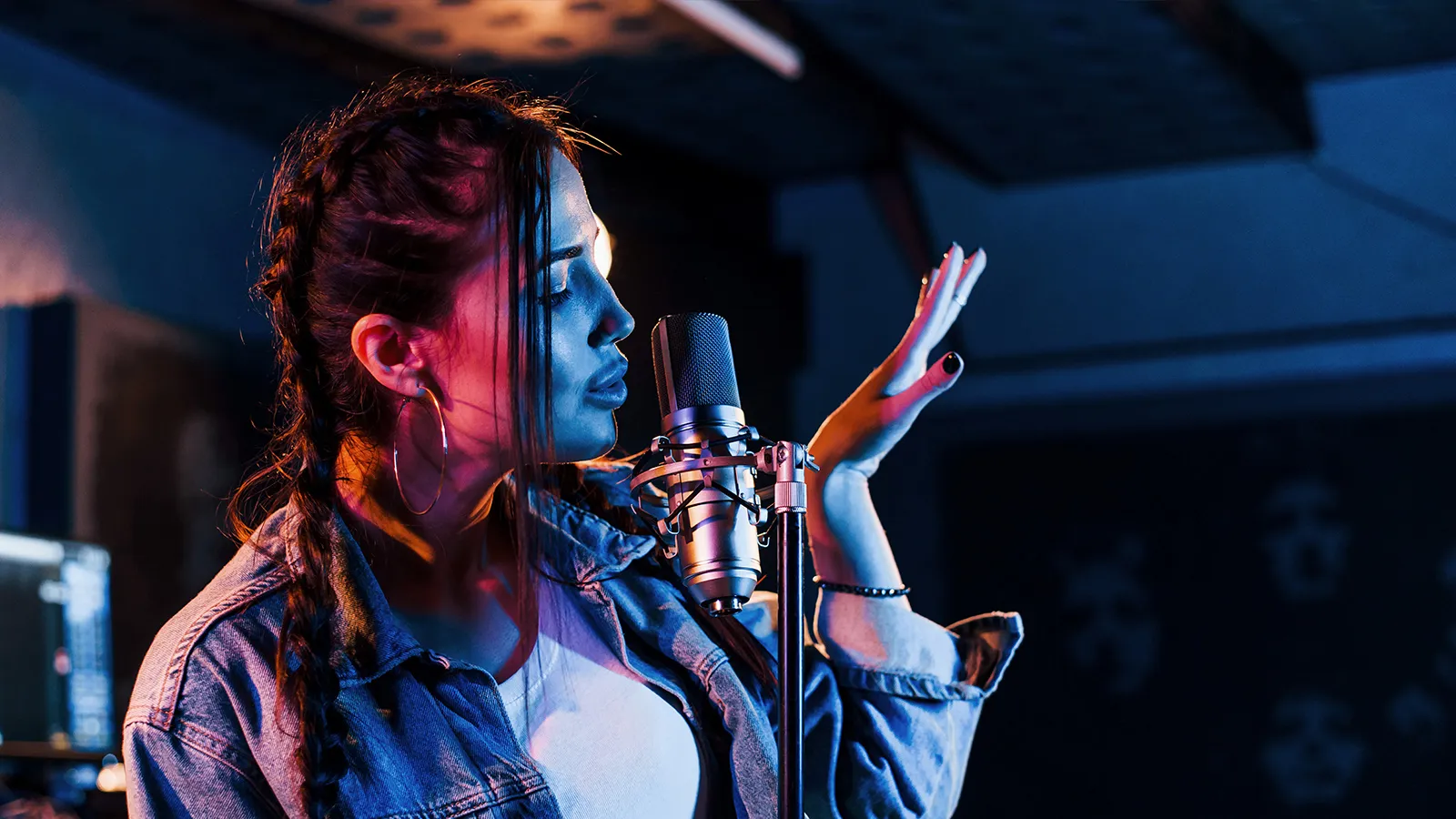
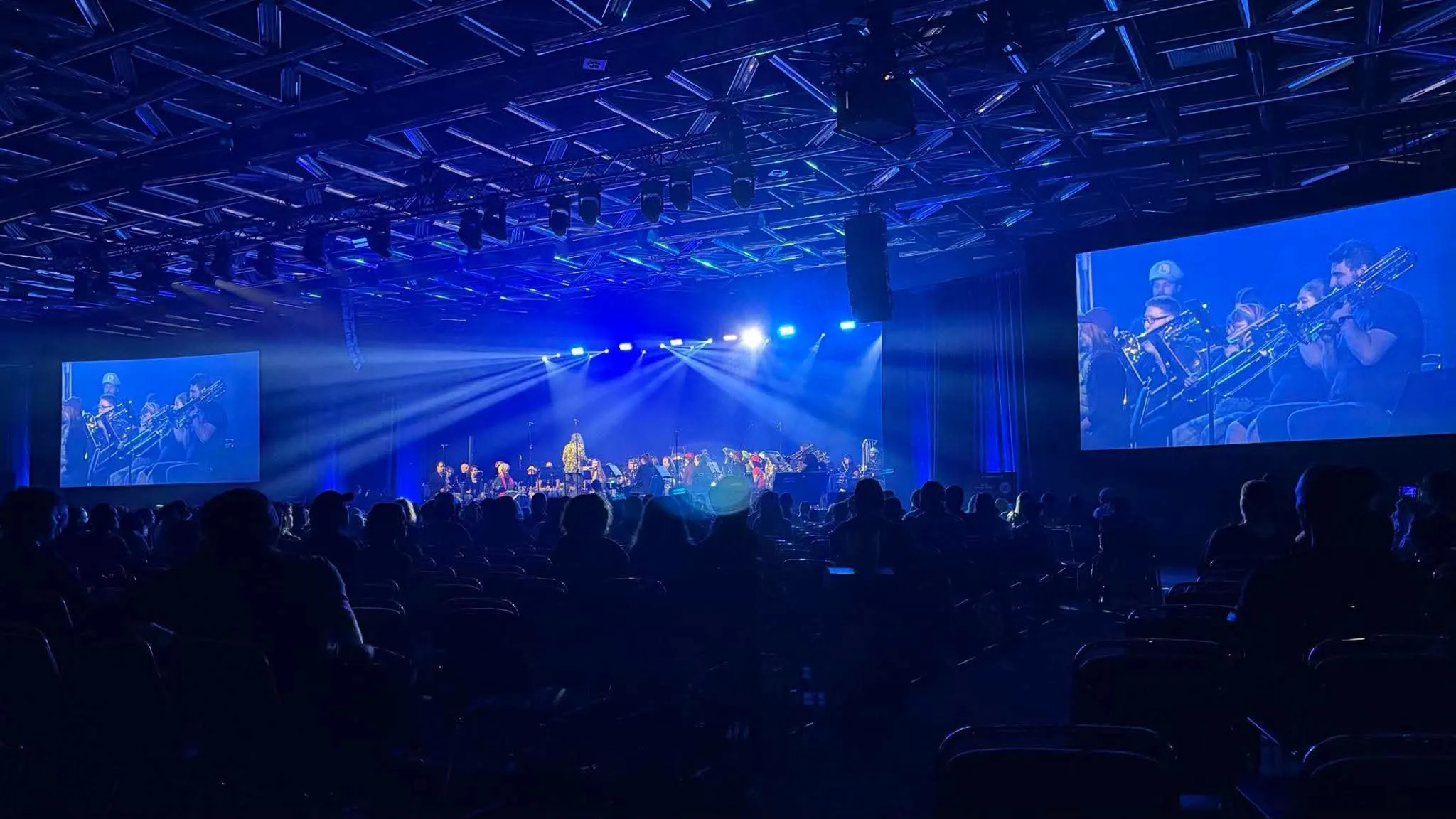
Everything is DMX-controlled from the booth, with cues programmed in advance and tested during rehearsals. In practice: your host walks on stage, the light is already in the right spot; the video starts, the stage lighting dims smoothly; the award winner arrives, the followspot picks them up. Nothing is left to last-minute reactions.
Our technician stays in the booth throughout the event and works with the same team as the audio and video crews—meaning no need to coordinate between three different vendors when the schedule slips by ten minutes.
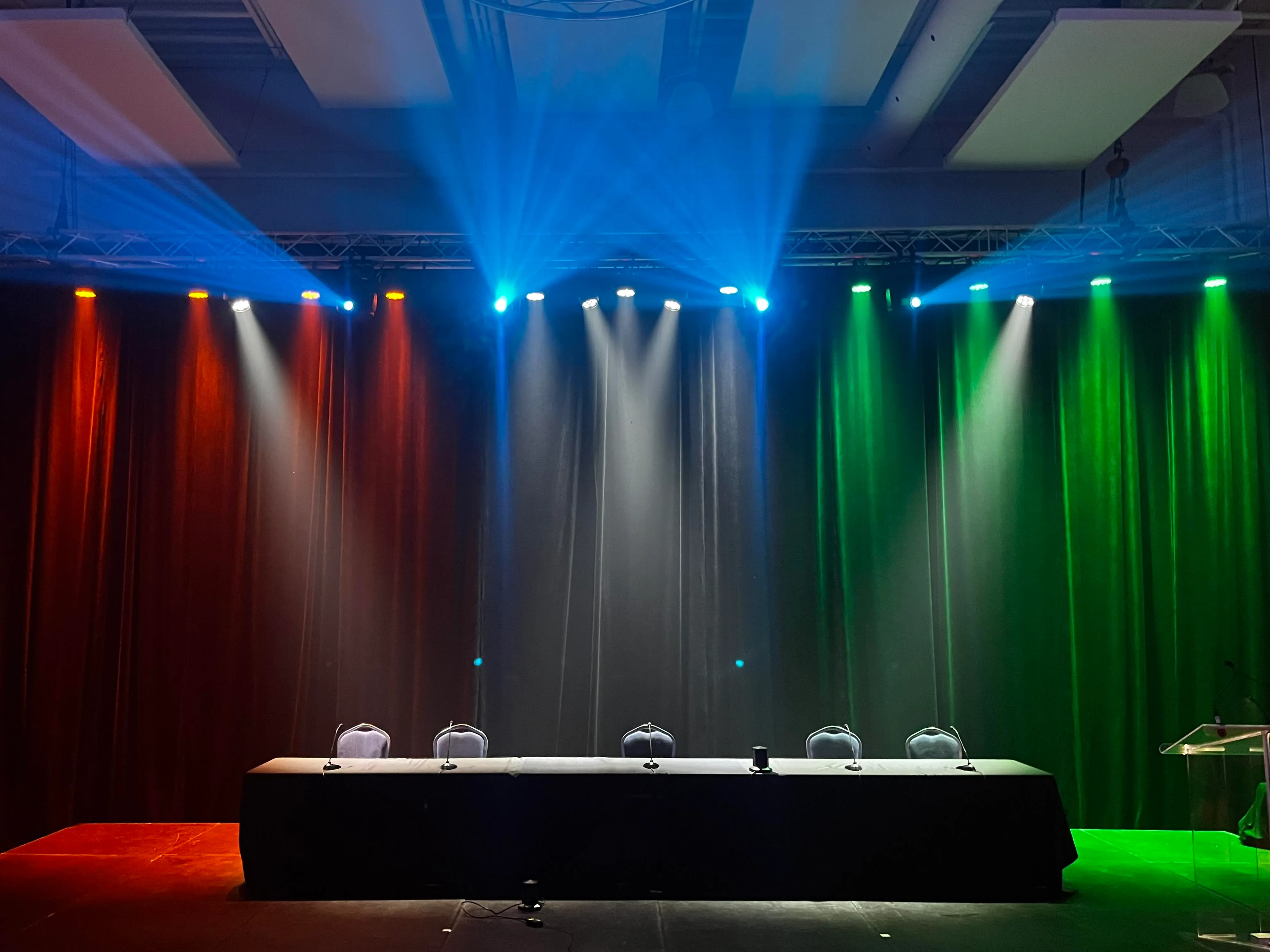
Conferences and conventions: priority on facial clarity and camera compatibility, sufficient room lighting for note-taking, and controlled contrast with projection screens.
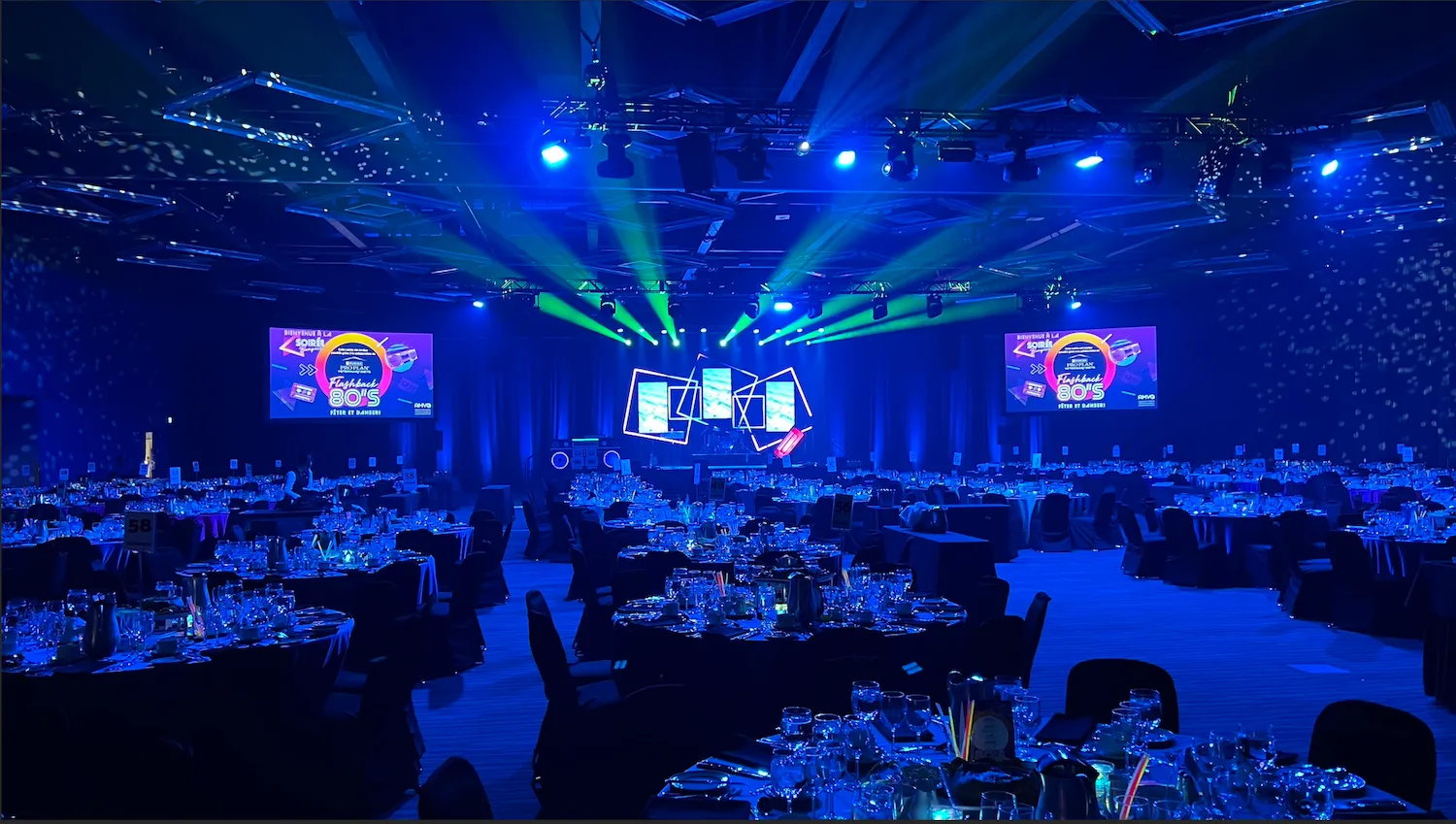
Galas and awards ceremonies: bolder staging, vibrant colors, moving heads, followspots, and room ambiance between segments.
General meetings: understated, uniform, and no shadows on table microphones.
Product launches: lighting dedicated to the product itself, often using profile spots, with sharp contrast against the stage.
Hybrid events and recording: color temperature and levels calibrated for the camera, because what looks beautiful to the eye isn't always beautiful on screen.
We agree on these deliverables during the design phase: the way we film differs depending on whether your goal is to archive an assembly or create a series of clips for your social media.
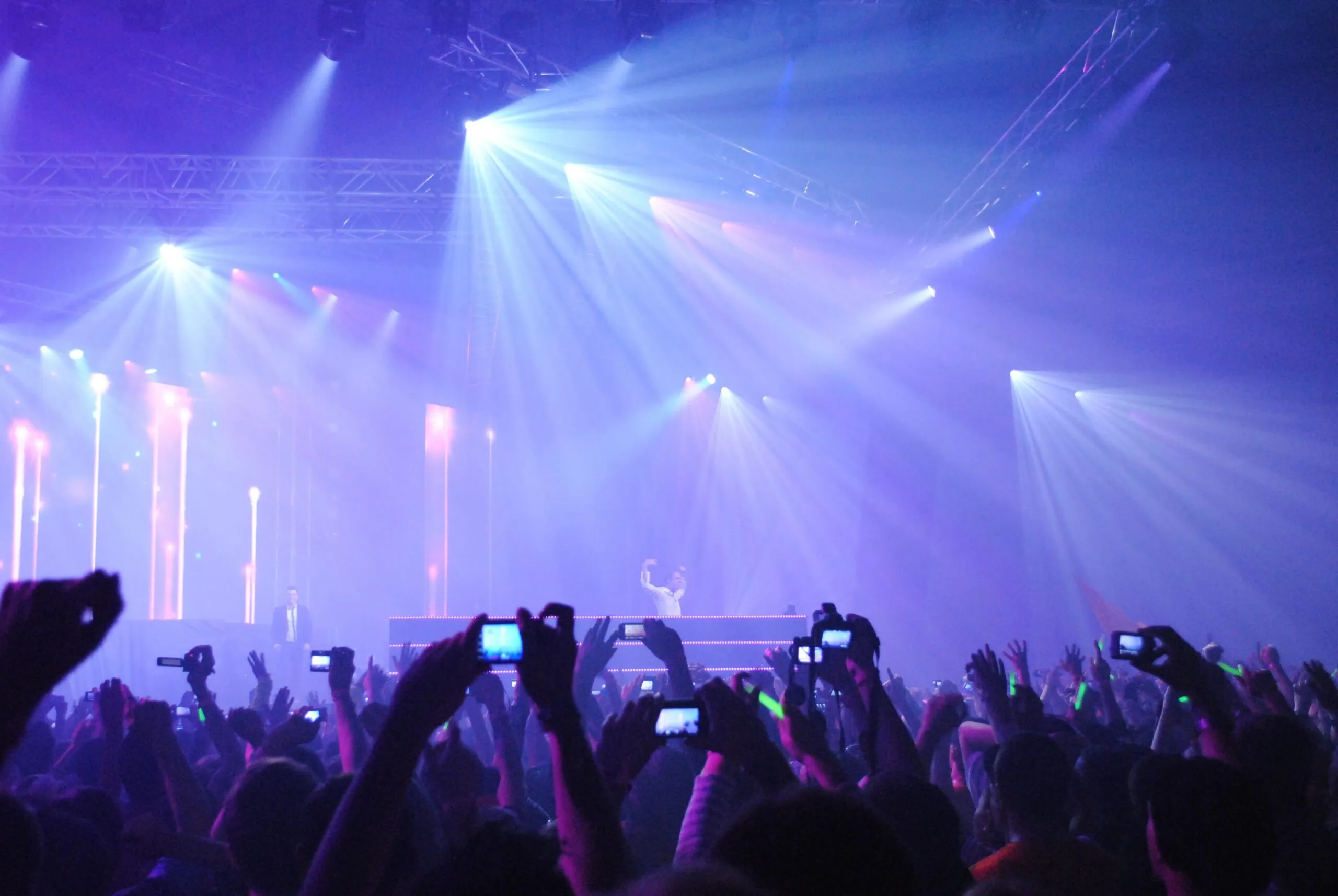
Projectors aren't everything. Creating an atmosphere also requires accessories: gels and filters, custom gobos, structures and trusses, stands, slings, dimmers, and, when the staging allows, fog or light haze machines that reveal the beams. These lights, visible in the air, completely change the perception of a show or gala.
We choose these products based on the venue: a room equipped with sensitive smoke detectors requires a very fine water-based haze, or sometimes no effect at all. Once again, verification is done beforehand, not during the event.
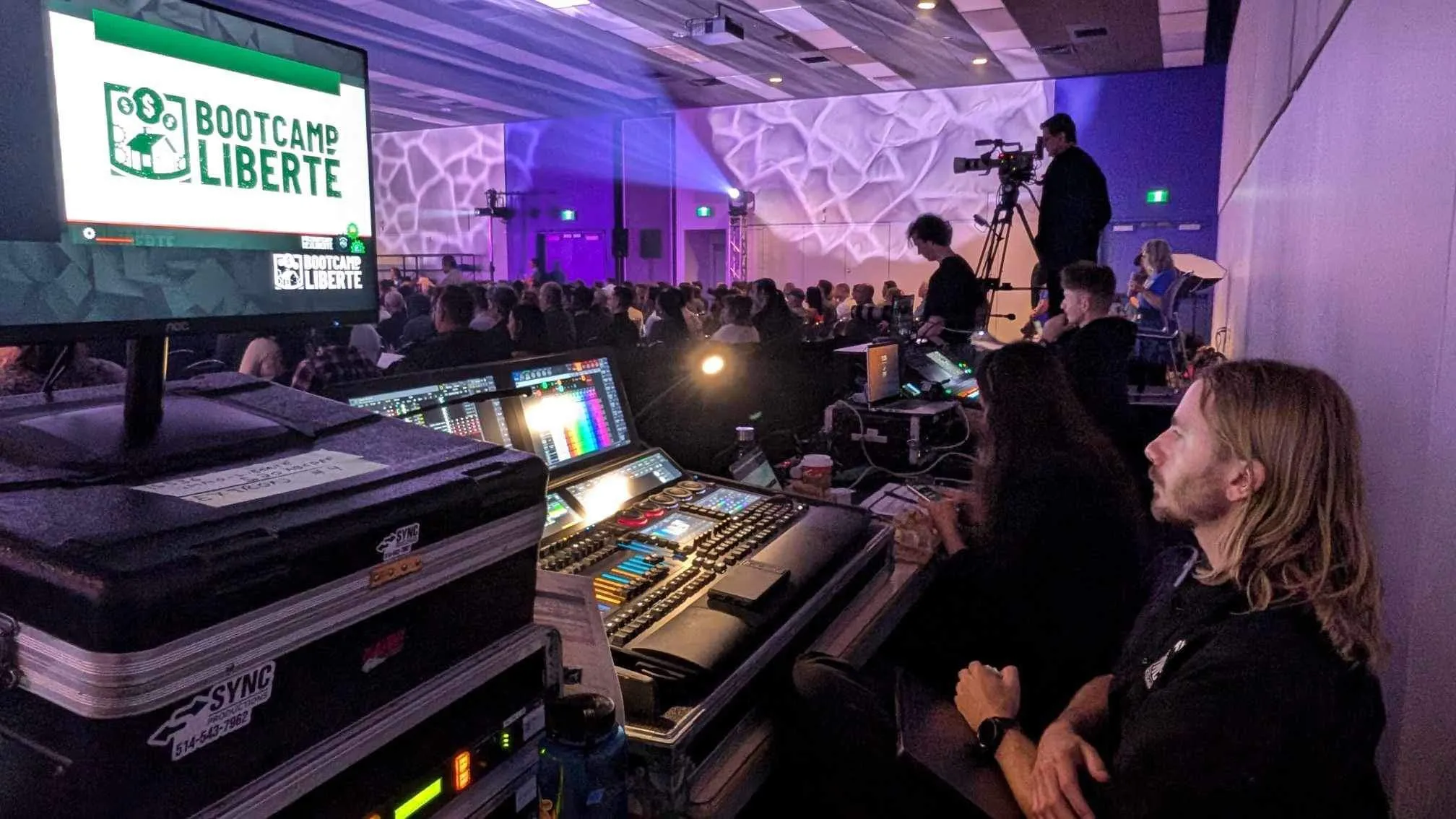
Our stage lighting services cater to corporate events as well as productions closer to theater and live performance: corporate parties, musical performances, awards ceremonies, weddings, corporate anniversaries, and themed parties.
The terminology may change, but the method remains the same: a lighting plot tailored to the type of event, projectors and lamps chosen for their color rendering, and an operator who follows the run of show. For events that are filmed or photographed, we adjust the levels so that the photo and video do justice to the stage—light that looks superb to the eye can be catastrophic on camera.
A lighting plan is built in layers, in this order:
The light that illuminates faces, positioned at about 45 degrees on each side to avoid harsh shadows. This is the non-negotiable layer.
Placed behind the speakers, it separates the silhouette from the background and adds depth to the stage.
They sculpt volumes, which is very useful for performances and stage shows.c, summary edit.
washes of color on the wall, curtain, or set, often using LED wash fixtures.
ellipsoidals for the console, moving heads for effects, and followspots to track a person.
A conference often stops at layers 1 and 2; a gala uses all five. It is this balance, not the number of fixtures, that distinguishes professional stage lighting from a random pile of lights.
Stage lighting involves overhead weight. We provide the necessary structures, trusses, and stands, validate anchor points with the venue, calculate available electrical load, and document the setup.
Cables are managed neatly, taped down, and kept out of walkways. It’s less spectacular than the light beams, but it’s what sets a professional team apart.
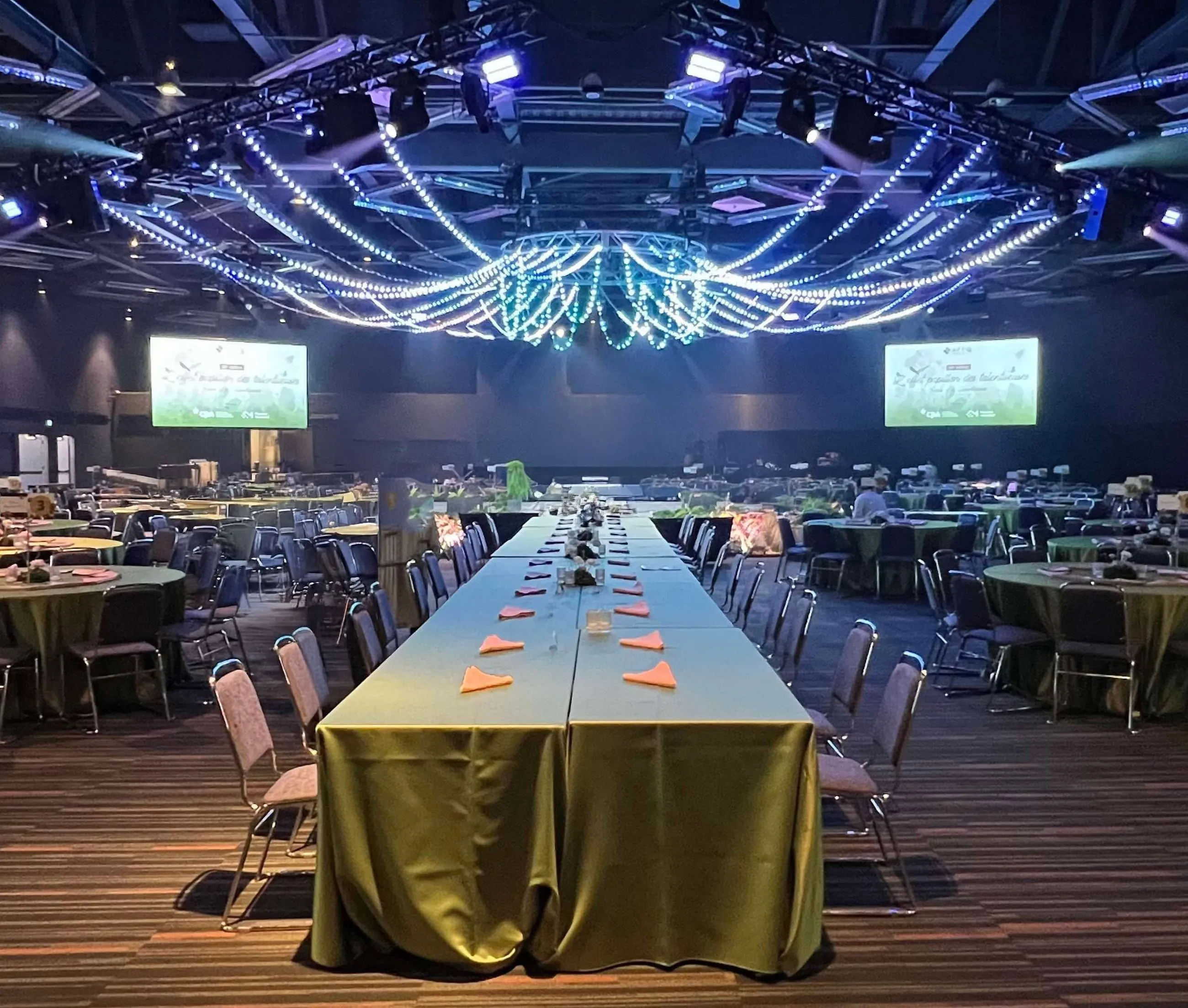

If you already have a lighting designer, we can provide the equipment and set it up. If you are starting from scratch, we handle the design, setup, programming, operation, and strike. In both cases, the quote is detailed: equipment list, personnel, transport, and duration.



Customized audiovisual solutions for immersive corporate events.